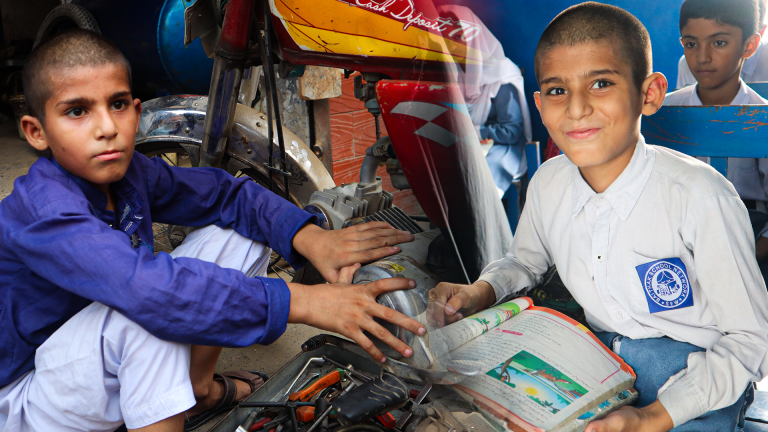
For thousands of children across Pakistan, the school day doesn’t begin with a bell — it begins with a shift. A few hours at a repair shop, a roadside stall, or someone else’s kitchen, and only then, if there’s time and energy left, a seat in the classroom. This is the quiet, everyday reality behind the phrase “working student” in Pakistan: not a headline, but a daily balancing act between survival and the right to learn.
The Scale of the Problem
Child labour in Pakistan isn’t a fringe issue — it sits at the center of the country’s education crisis. Globally, the International Labour Organization and UNICEF estimated in their 2024 report that roughly 138 million children were engaged in child labour worldwide, with tens of millions in conditions hazardous enough to put their health and development at risk.
Pakistan’s own numbers tell a similarly hard story at the provincial level. The Sindh Child Labour Survey (2022–2024), carried out with UNICEF and the Bureau of Statistics Sindh, found that over 1.6 million children aged 5 to 17 in Sindh alone were engaged in child labour — and that working children attend school at dramatically lower rates than their peers who don’t work. The gap is especially stark for older girls, who often carry the heaviest load of unpaid household work on top of everything else.
These numbers sit alongside a bigger national reality that Baithak School Network has long worked against: an estimated 26.2 million children in Pakistan are currently out of school altogether. Many of them aren’t “out of school” by choice or neglect — they’re out of school because a family’s income depends on their labour.
Why Children Work Instead of Study
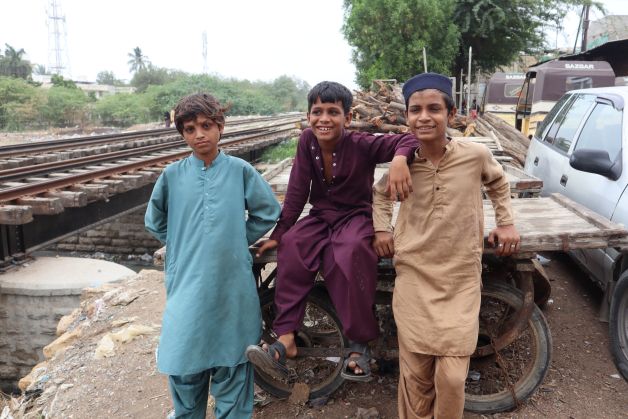
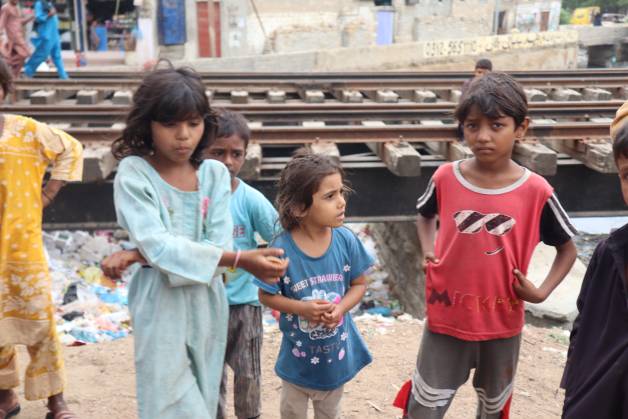
The reasons are rarely complicated, even if the solutions are. Poverty is consistently identified as the single largest driver of child labour in Pakistan — when a household’s survival depends on every possible income stream, a child’s ability to earn, even a small amount, can outweigh the long-term value of an education that doesn’t put food on the table today.
Add to this the practical barriers many families in underserved and slum communities already face — schools that are too far away, too expensive, or simply don’t exist nearby — and it becomes clear why “going to school” and “going to work” often aren’t a choice at all, but a forced trade-off.
What Balancing Both Actually Looks Like
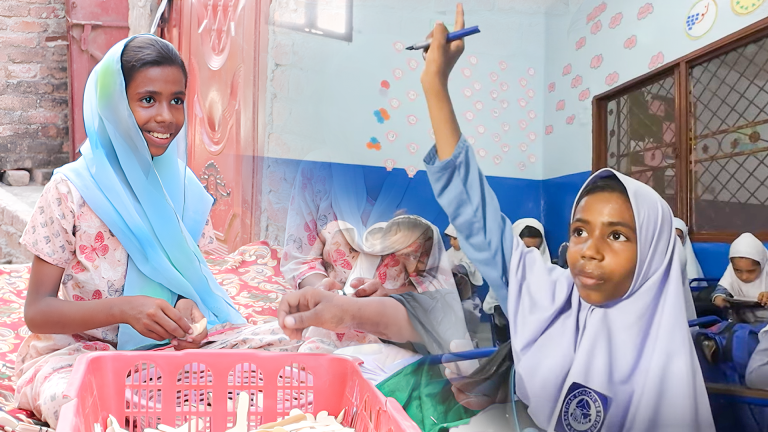
At Baithak School Network, we see this balancing act up close, in the daily lives of real students. Mohib-ur-Rehman, a Class 3 student at Baithak School Rana Town, Lahore, helps out at a bicycle repair shop before school each day — and still shows up with his notebook open, holding onto a future bigger than the workshop he starts his mornings in. Hadia Shahbaz, a Class 4 student, balances small jobs at home with her studies at Baithak School Barket Town, Lahore, determined not to let either one fall behind.
Stories like these aren’t the exception in the communities Baithak works in — they’re closer to the rule. What makes the difference isn’t the absence of hardship; it’s whether a child has a school nearby that’s built to work around that hardship rather than around an assumption that childhood looks the same for everyone.
How Baithak School Network Responds
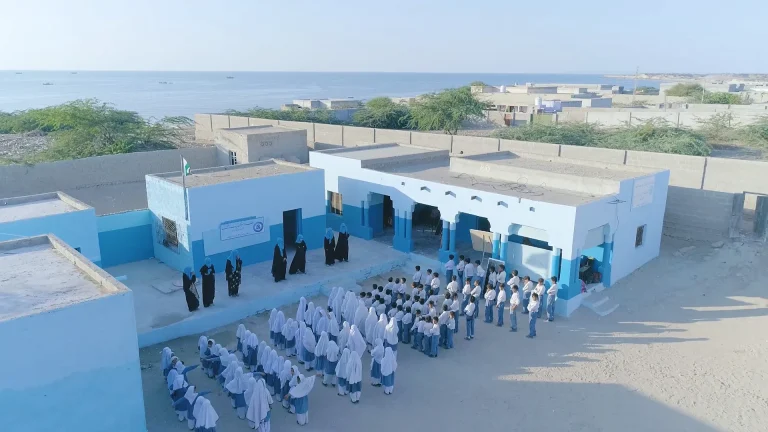
This is precisely why Baithak’s model looks the way it does:
How You Can Help
Every working student who stays in school does so because someone — a teacher, a donor, a volunteer — decided that a child’s education was worth protecting. Sponsoring a child’s education for a year, funding a classroom, or supporting Baithak’s Industrial Homes program for mothers all directly reduce the pressure that pulls children out of the classroom and into the workforce before they’re ready.
If you’ve read this far, you already understand what’s at stake. The next step is simple: sponsor a child’s education or read more real student stories from the communities Baithak serves.
Baithak School Network is an initiative of the Society for Educational Welfare (SEW), working since 1996 to bring free, community-based education to underserved children across Pakistan.